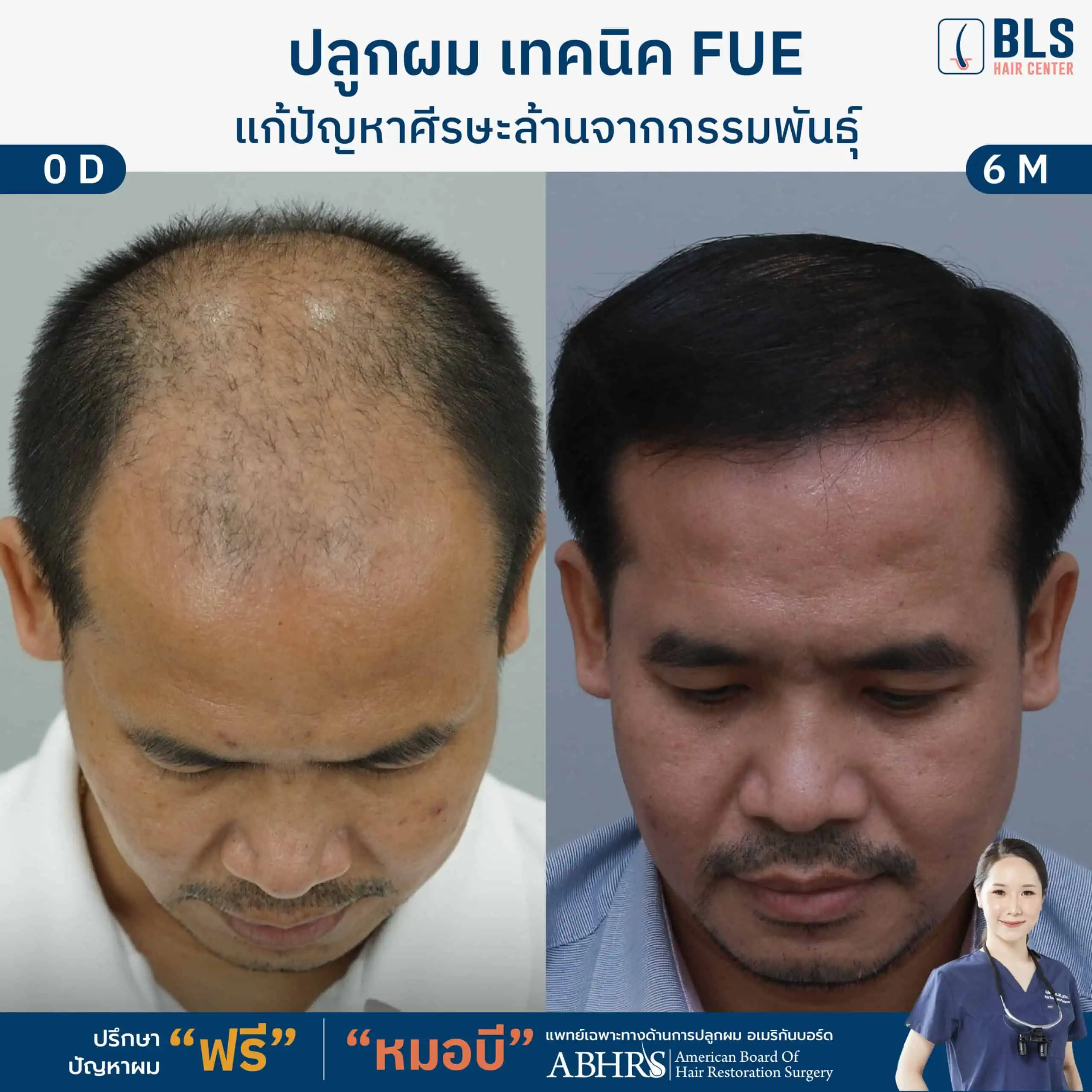
At any given time, the human scalp contains around 100,000 hair strands. Hair grows at an average rate of about half a millimeter per day—or roughly 1 centimeter per month. This growth rate slows down with age.
Normally, we shed about 25–100 hairs per day. On days when we shampoo or frequently tug at our hair, the shedding may increase. If the hair loss remains within the normal range, new hair will grow to replace it, keeping the overall hair count stable and preventing baldness.
However, if you’re experiencing excessive hair loss or thinning to the point of visible scalp, beware—you may be facing genetic baldness. If left untreated, your hair may continue to fall until permanent baldness occurs.
What Is Genetic Baldness (Androgenetic Alopecia)?
It’s a condition that causes hair loss, thinning, and baldness due to genetic factors, elevated levels of male hormones (androgens), and aging. It’s more common in men than women.
Androgenetic alopecia, or genetic baldness, begins with thinning hair. New strands become finer and weaker, leading to visible scalp. Over time, the affected area widens, and the hair follicles shrink—resulting in irreversible baldness.
Among Thai men aged 18–90, approximately 38.5% experience androgenetic alopecia, most commonly with thinning at the crown. Globally, this condition often begins in adolescence. Men tend to develop symptoms earlier than women, who typically experience it later in life.

What Causes Genetic Baldness?
It stems from a gene located on the X chromosome. This gene doesn’t directly cause hair loss but enhances the activity of androgen receptors in hair follicles, leading to thinning.
Testosterone, a male hormone, is converted into DHT (Dihydrotestosterone) by enzymes in the scalp. DHT shortens the hair growth phase, prolongs the resting phase, and causes hair strands to become finer. Over time, hair at the crown and front becomes sparse, and follicles produce less hair until they eventually die—resulting in baldness that cannot be reversed with topical treatments. Only permanent hair transplantation can restore hair in such cases.
In short, the gene increases the effect of DHT on hair. Without intervention, progressive thinning leads to permanent baldness.

Male Pattern Baldness Classification
The Norwood-Hamilton Classification is used to assess severity, focusing on recession at the temples (bitemporal) and crown (vertex). In Asian populations, baldness is categorized into four types and seven severity levels.

Female Pattern Baldness Classification
The Ludwig Classification assesses severity in three stages, focusing on thinning at the front (temporal) and crown (vertex). For Asian women, the scale can be expanded to seven levels based on common patterns.



When to See a Hair Specialist
If you’re losing more than 100–200 hairs per day, it’s time to consult a hair specialist. Early diagnosis leads to more effective treatment.
If follicles are still present, thinning can be treated with medication, PRP (Platelet Rich Plasma) injections, or laser therapy—no surgery required.
If follicles have died, hair cannot regrow through stimulation. In such cases, permanent hair transplantation is recommended.
Where to Treat Genetic Baldness
Choosing the right clinic is crucial—whether you’re in the early stages or already bald.
For early-stage thinning, a certified hair specialist can provide proper treatment and help preserve existing hair.
For advanced baldness requiring transplantation, it’s essential to choose a specialist with experience in designing natural hairlines. The physician must be formally trained in hair restoration to avoid repeat procedures and ensure lasting results.
The ideal clinic should offer care by certified hair specialists, use advanced equipment, maintain strict hygiene, and operate in a standard surgical environment—minimizing risk and maximizing long-term results.
Why Choose BLS Hair Center?
- Consultations and procedures are handled by Dr. Bee, a certified hair transplant specialist (ISHRS, USA), who oversees every case from start to finish
- Personalized treatment plans and hairline designs tailored to each individual’s facial structure—so you look and feel your best
- Exclusive Hair-Live Technique preserves follicle integrity during transplantation, ensuring optimal, permanent results
If you’re experiencing hair loss, thinning, or baldness, consult a hair specialist to identify the cause and find the most suitable solution. You can book a free consultation with Dr. Kulvipaphat Chattharapisanukul, ABHRS-certified hair transplant specialist, at BLS Hair Center.
Review of treatment for hereditary baldness